THE MOST EXPENSIVE SALES PROBLEMS ARE OFTEN THE ONES YOU CANNOT SEE
How much revenue is being lost
inside your sales team?
And how much more will your next bad sales hire cost you?
Use SPQ*GOLD to understand sales barriers before a hire or within your existing team. Add CSI—or use it on its own—to explore how people prefer to work and what helps them perform.
SPQ*GOLD AND CSI
Evidence for the decision. Insight for the next step.
SPQ*GOLD adds sales-specific evidence. CSI explores workplace preferences. PWA interprets the findings against the role, the person and your priorities.
Understand the person. Strengthen the decision.
WHAT SPQ*GOLD ACTUALLY LOOKS LIKE
Two reports. Two very different levels of sales risk.
Both candidates may have interviewed well. The assessment evidence tells a very different story: Lewis scores 228 with two focused primary concerns, while Samuel scores 143 with eight primary concerns and a materially greater sales-role risk.
GOOD SPQ*GOLD PROFILE
228 · Two primary concerns

Broadly positive sales evidence with two defined risks to test.
VERY MIXED SPQ*GOLD PROFILE
143 · Eight primary concerns

A substantially more complex sales risk and support picture.
Click either report image to open the full example.
THREE WAYS TO USE SPQ*GOLD
Which person in your business would be most valuable to understand properly?
SPQ*GOLD is not only for your next hire. It can help you investigate a live performance issue, understand a proven performer or reduce the risk behind an important appointment.
1 · THE STRUGGLER
Someone you cannot quite unlock
You can see the symptoms—low activity, inconsistent results, weak follow-up or avoided conversations—but not necessarily the cause. SPQ*GOLD helps identify the underlying sales barriers so coaching and management can focus on what is really getting in the way.
2 · THE STAR
Someone you cannot afford to lose
What sits behind their success? SPQ*GOLD gives you a structured view of the sales behaviours, energy and goal focus supporting their results—helping you make coaching, development and future expectations more relevant.
3 · THE POTENTIAL HIRE
Someone who interviewed brilliantly
Have you ever hired someone who looked perfect at interview but failed to perform once they joined? SPQ*GOLD adds sales-specific evidence to reveal risks that polished answers and a strong CV may not show.
THE REAL COST OF A BAD SALES HIRE
Salary is only the beginning
Money spent
Recruitment fees, salary, guaranteed commission, onboarding and training.
Revenue missed
Opportunities go untouched, pipelines weaken and expected sales do not materialise.
Time lost
Months of management effort—followed by the cost and delay of starting again.
THREE COSTLY PEOPLE RISKS. TWO DIFFERENT ASSESSMENTS.
Choose the assessment to match the question.
SPQ*GOLD identifies the sales barriers behind existing underperformance and hiring risk. CSI identifies the management and motivational levers that determine whether individual potential is fully used.
EXISTING PERFORMANCE RISK · SPQ*GOLD
How much opportunity are they already losing?
Low activity, inconsistent follow-up and avoided sales conversations are visible symptoms. SPQ*GOLD helps identify whether selling comfort, motivation, resilience or goal focus may be restricting the activity needed to proactively create opportunities.
SPQ reveals the barriers.
HIRING RISK · SPQ*GOLD
How much will the next wrong hire cost?
The dangerous candidate may be the confident, credible person who interviews brilliantly but cannot sustain the realities of the role. SPQ*GOLD helps expose that risk before the salary, management time and missed revenue accumulate.
SPQ adds evidence before commitment.
MANAGEMENT RISK · CSI
How much potential is the wrong approach wasting?
Recognition may motivate one person while money matters far more to another. Personal development may feel like investment to one employee and an unwanted second job to someone else.
CSI reveals the levers.
Stop paying for problems you cannot yet see.
WHY CSI MATTERS
What motivates one person may demotivate another.
The same management style, reward or development opportunity will not produce the same response from everyone. CSI helps identify what the individual is most likely to value.
PERSONAL RECOGNITION
“Notice what I contribute.”
Some people need regular, visible acknowledgement to feel valued and remain fully engaged. A financial reward alone may not provide it.
FINANCIAL REWARD
“Show me the return.”
For others, money, commission and a clear link between results and earnings are far more motivating than praise or development programmes.
PERSONAL DEVELOPMENT
Investment—or an unwanted second job?
One person may see development as proof that the company believes in them. Another may experience it as extra work and evidence that their real priorities have been misunderstood.
CSI helps managers use the right lever for the individual—not the same lever for everyone.
CASE STUDIES
Hear directly from clients who stopped relying on instinct alone
PARK AVENUE RECRUITMENT
Five years. Every hire. Nearly 25 people.
HIGHFIELD / DATAX CONNECT
Science before the final interview.
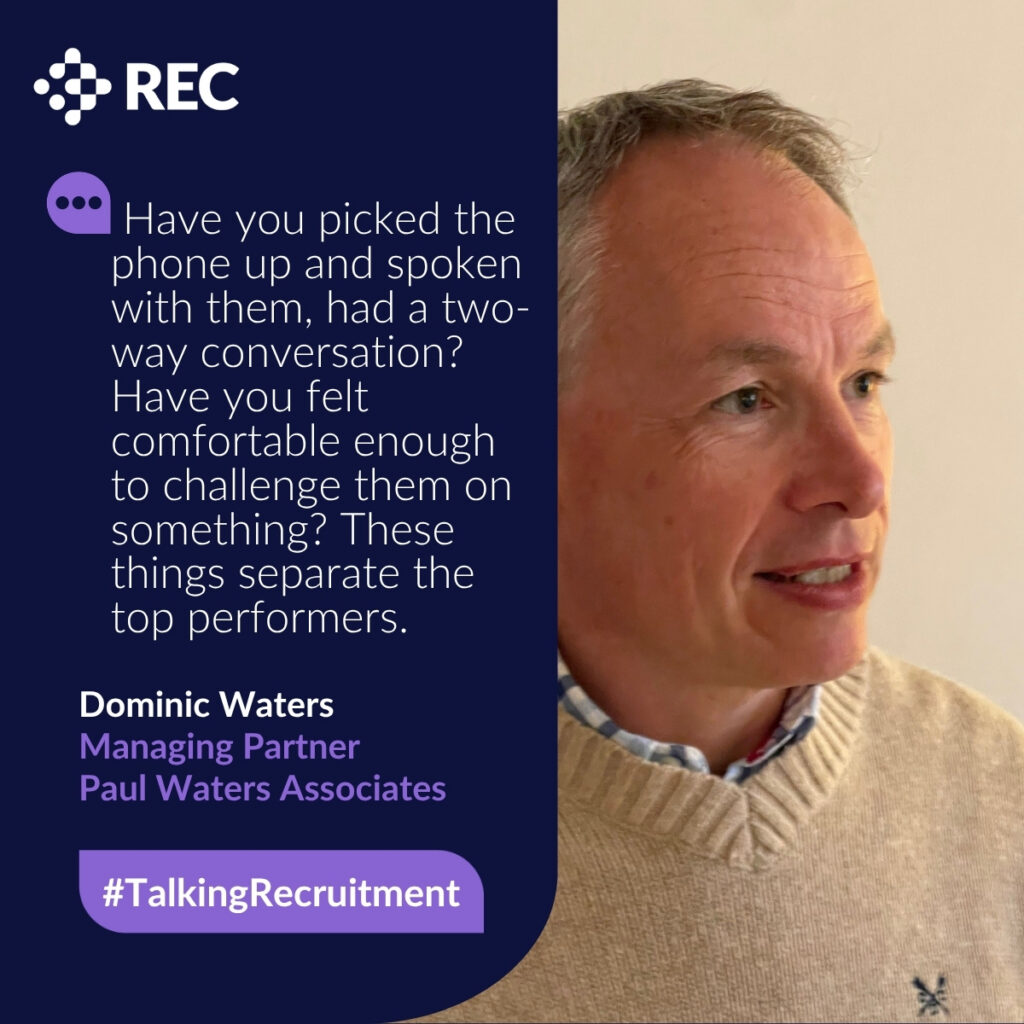
FEATURED TWICE ON REC TALKING RECRUITMENT
Better recruiter hiring—and the human advantage in an AI world.
REC has invited Dominic Waters onto two Talking Recruitment episodes: one on avoiding costly recruitment mis-hires, and one on how AI is reshaping recruitment and increasing the value of genuinely human judgement.
PWA is an REC Business Partner, and SPQ*GOLD is used by the REC in its own recruitment process.
FREQUENTLY ASKED QUESTIONS
The questions clients usually ask before using SPQ*GOLD
Straight answers about what the assessment measures, how individuals complete it and how the findings can support hiring, coaching and management decisions.
Is SPQ*GOLD a personality test?
No. It is a behavioural diagnostic focused specifically on sales-contact activity and the internal barriers that may restrict it—not a general description of someone’s personality.
Can a candidate manipulate the assessment?
Like any self-report assessment, SPQ*GOLD should not be described as impossible to manipulate. Its measures of test-taking behaviour flag patterns that may require more cautious, expert interpretation.
Does a concerning result mean automatic rejection?
No. A concern identifies what needs closer examination, what evidence should be sought and what level of onboarding or management support the appointment may require.
How does SPQ*GOLD fit into the hiring process?
It is particularly valuable before the final interview or hiring decision, allowing interviewers to probe the specific risks identified rather than discovering them several months after appointment.
Can SPQ*GOLD be used with existing salespeople?
Yes. It can help investigate what may be holding a struggling salesperson back or provide a structured view of the sales behaviours supporting a strong performer—giving managers more focused evidence for coaching, development and performance conversations.
PAUL WATERS ASSOCIATES
A family business with specialist sales-assessment experience
Established in 1981, Paul Waters Associates has represented Behavioral Sciences Research Press (BSRP)—the organisation behind the SPQ*GOLD sales test and the Career Styles Inventory (CSI) assessment—since 1993. Clients receive experienced interpretation in the context of the role and commercial decision, not an abstract score.
What clients receive
- Clear concern areas
- Targeted questions
- Onboarding guidance
- Management actions
Who immediately springs to mind—the struggler, the star or the potential hire?
Tell us which person would be most valuable for you to understand properly, and we will explain the most useful next step.